All Categories
Featured
Financial Factors and How More Americans Need Are Seeking...
The 5-Minute Rule for Understanding Different Debt Forgiv...

The smart Trick of Pricing Clarity to Watch For That Nobody is Discussing
Table of Contents
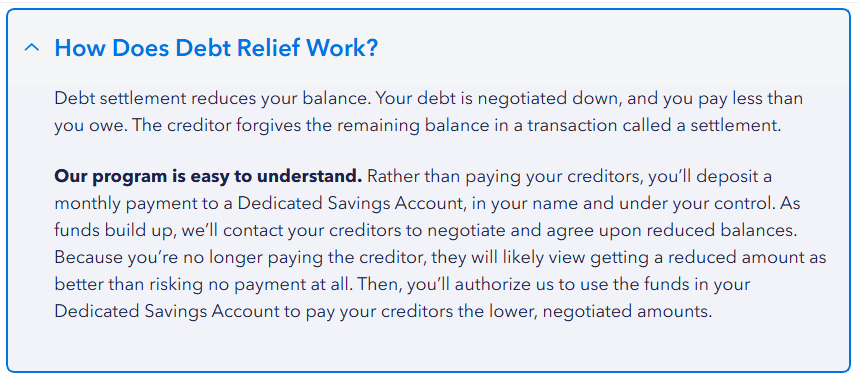
That maximizes money in the short-term, and you may have three to four years to save towards the negotiation quantity. Really unsafe to credit history scores, largely because of missed out on payments and a negative "cleared up" mark that might remain on your credit score record for up to seven yearsMay be only choice if various other options (debt loan consolidation, equilibrium transfer charge card, debt mercy) aren't possibleTypically needs a cost to the 3rd party, which could counter some or every one of the financial savings from debt settlementMay help you prevent bankruptcy if you've missed a number of paymentsNot all financial institutions collaborate with debt settlement firms Financial obligation forgiveness might be appropriate for you if you are experiencing an economic difficulty that makes it nearly impossible to pay down your financial debt equilibriums.
With a DMP, you make one regular monthly payment to the credit score therapy firm. Those funds are then dispersed to creditors of your unsafe financial obligations, such as credit score cards and installment car loans. The company deals with your lenders to minimize rate of interest or forgo costs, however some financial institutions may decline such concessions.
A debt combination funding combines your eligible financial debts into one brand-new loan. It can assist you pay for financial obligation if you have the ability to safeguard a funding price that's less than the ordinary price of the accounts you're settling. You need to refrain from racking up financial debt on those freshly removed accounts or your financial obligation could grow even greater.

These cards typically provide a 0% rate of interest introductory period of as much as 21 months. That gives you a lot of time to remove or considerably lower your balance while making interest-free settlements. For some people dealing with impossible financial obligation, bankruptcy may be the only way to stop collection procedures and lawfully solve their financial debts.
The Ultimate Guide To Your Introduction to Debt Counseling and What to Expect
You may require it if your lender or a collection firm ever attempts to gather on the financial obligation in the future. When a loan provider forgives $600 or even more, they are required to send you Form 1099-C.
Financial obligation mercy or settlement generally injures your credit rating. Anytime you resolve a financial obligation for much less than you owe, it might look like "resolved" on your credit record and affect your credit history for 7 years from the day of negotiation. Your credit score can additionally go down considerably in the months leading to the mercy if you drop behind on repayments.
5 Simple Techniques For Complimentary Educational Specialty Counseling Services : APFSC Tailored Financial Support Materials Offered by APFSC
This situation usually results from underreporting earnings, not filing returns on time, or inconsistencies located during an Internal revenue service audit. The repercussions of gathering tax financial obligation are significant and can include tax liens, which provide the IRS a lawful insurance claim to your home as security for the financial debt.
Greater rates of interest on readily available credit report. Wages and Financial institution Accounts IRS can levy (confiscate) earnings and checking account to please the debt. Lowered revenue and interruption of necessary financial procedures. Property Seizure In extreme cases, the IRS can seize and offer building to cover the financial obligation. Loss of important properties and potential variation.
Social Preconception Facing legal activity from the IRS can lug social preconception. Employment Opportunities A bad credit scores score due to tire debt can limit employment possibilities. Government Advantages Tax obligation financial debt might impact qualification for federal government advantages, such as Social Protection and Medicaid.
Facts About Does Debt Forgiveness Make Sense for Your Case Revealed
The OIC takes into consideration a number of elements, including the taxpayer's earnings, expenditures, asset equity, and capacity to pay. Efficiently negotiating an OIC can be intricate, needing a detailed understanding of the IRS's guidelines and a strong disagreement for why your deal straightens with your ability to pay. It's important to note that not all applications are accepted, and the procedure requires detailed financial disclosure.
The IRS analyzes your general economic scenario, including your revenue, expenses, asset equity, and capability to pay. You have to also be current with all filing and settlement requirements and not remain in an open insolvency proceeding. The internal revenue service likewise considers your compliance history, evaluating whether you have a record of timely filing and paying tax obligations in previous years.
The Best Strategy To Use For Credit Card Debt Specialty Counseling Services : APFSC Tailored Financial Support Solutions
The application procedure for a Deal in Concession includes several in-depth actions. You have to finish and submit IRS Type 656, the Deal in Concession application, and Form 433-A (OIC), a collection information statement for individuals. These forms require extensive monetary information, including details regarding your revenue, financial obligations, expenses, and properties.
Back tax obligations, which are unpaid taxes from previous years, can significantly enhance your overall internal revenue service financial debt otherwise addressed promptly. This financial debt can build up rate of interest and late repayment charges, making the original amount owed a lot bigger with time. Failing to repay tax obligations can lead to the internal revenue service taking enforcement actions, such as issuing a tax obligation lien or levy against your building.
It is essential to attend to back tax obligations immediately, either by paying the full quantity owed or by arranging a repayment plan with the internal revenue service. By taking proactive actions, you can avoid the accumulation of extra passion and fines, and prevent a lot more hostile collection actions by the IRS.
One common reason is the belief that the taxpayer can pay the total either as a swelling amount or via a layaway plan. The internal revenue service likewise considers the taxpayer's income, expenses, possession equity, and future earning potential. If these elements indicate that the taxpayer can afford to pay greater than the provided amount, the internal revenue service is likely to reject the deal.
Everything about Shielding Yourself from Fraudulent Schemes
Dealing with Internal revenue service debt can be intricate and overwhelming. Tax experts, such as Certified public accountants, tax lawyers, or registered agents, can offer important help.

Table of Contents
Latest Posts
Financial Factors and How More Americans Need Are Seeking Fee Waivers and Discounts for Bankruptcy Counseling: Who Qualifies? - An Overview
Some Known Incorrect Statements About How to Contact APFSC with Your Debt Forgiveness Journey
The Only Guide for Developing a Personalized Debt Relief Plan
More
Latest Posts
Some Known Incorrect Statements About How to Contact APFSC with Your Debt Forgiveness Journey
The Only Guide for Developing a Personalized Debt Relief Plan